When Beloved Breeds Need Conservation Biology
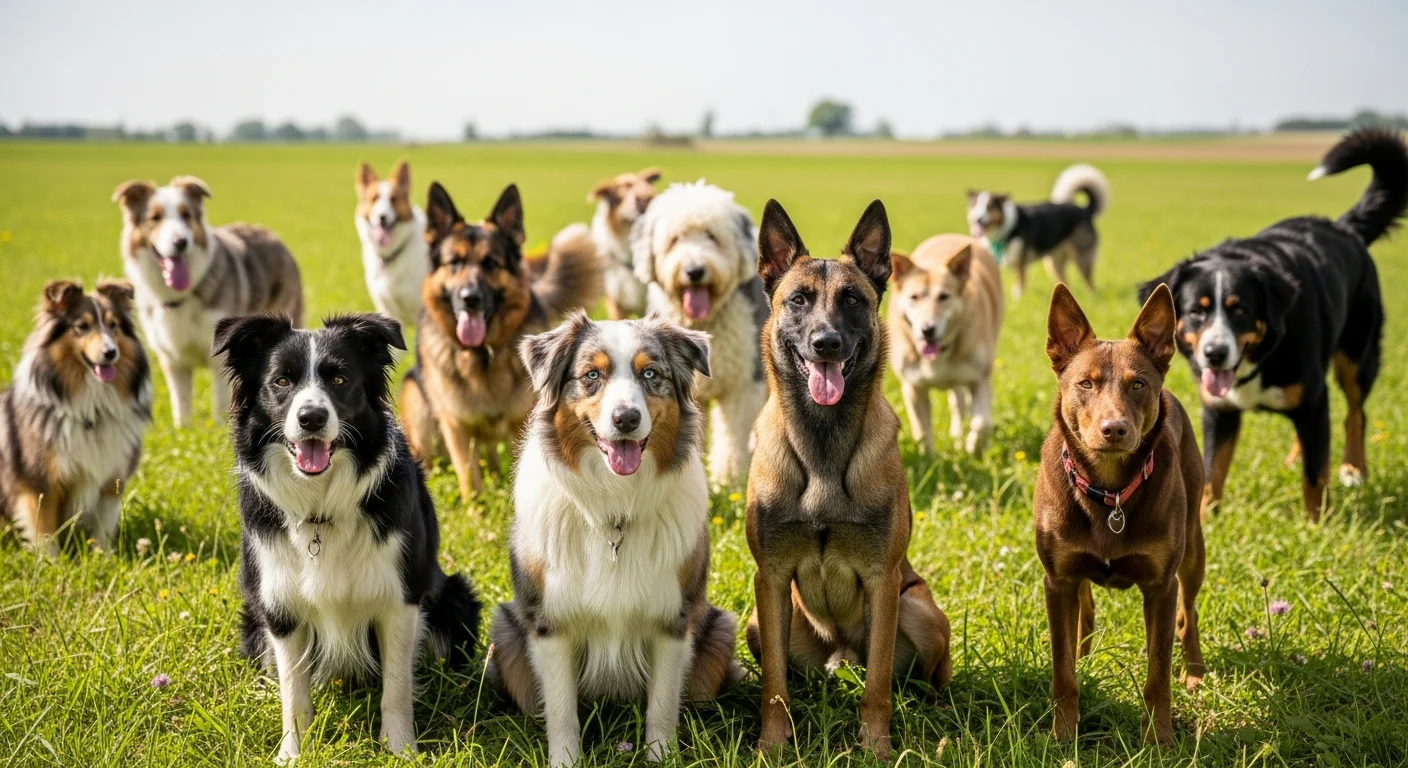
The term “conservation” rarely appears in discussions of purebred dog breeding, yet the genetic challenges facing many closed-registry herding breeds are not fundamentally different from those confronting endangered species managed by zoological institutions worldwide. Both situations involve small, isolated populations; both face the progressive accumulation of inbreeding and genetic drift; both require deliberate human intervention to prevent the erosion of diversity that threatens long-term health and adaptability.
This parallel is not merely rhetorical. The science developed to manage captive populations of endangered species — population viability analysis, optimal contribution selection, kinship-informed pairings, systematic gene banking — is directly applicable to closed dog breed populations. Where conservation biology has developed these tools over decades of necessity, dog breeding communities are only beginning to adopt them. The transfer of knowledge between these fields represents one of the most promising developments in canine population health.
The Parallel Between Endangered Species and Closed Breeds
Consider what defines a population at genetic risk from a conservation biology perspective. Key indicators include:
Effective population size below 100. Most conservation geneticists treat Ne below 100 as a threshold of serious concern. Populations below this value accumulate inbreeding at a rate that exceeds the capacity of selection to remove deleterious alleles, leading to progressive health decline.
Allelic diversity loss exceeding 10% per generation. When alleles disappear faster than they can be maintained by selection or introduced through gene flow, the population’s adaptive potential is being eroded faster than it can be replaced.
Kinship coefficient trending upward across generations. When the average pairwise kinship across all individuals in the population increases each generation, the population is on a trajectory toward homozygosity that can only end one way.
Published population genetic analyses of herding breeds frequently document all three of these warning indicators. The population genetics principles that explain these dynamics apply as directly to Border Collies as to captive Amur leopards. The scale differs; the biology does not.
Mean Kinship and Optimal Contribution Selection
The tool that conservation biologists have found most effective for managing small captive populations is optimal contribution selection (OCS), a framework that explicitly calculates the best breeding decisions to minimize mean kinship across the population while still allowing progress on selected traits.
Mean kinship (mk) is the average kinship coefficient between an individual and every other individual in the population. An individual with low mean kinship — genetically unusual relative to the overall population — is more genetically valuable from a diversity standpoint because its genes are the least represented in the current gene pool. An individual with high mean kinship has genetics similar to many other dogs and contributes less new diversity per breeding opportunity.
OCS algorithms use mean kinship values to allocate breeding opportunities. An individual with low mk should be used more in breeding than one with high mk, even if the high-mk individual is phenotypically superior in the traits being selected. The algorithm finds the breeding scheme that maximizes genetic gain while keeping the rate of inbreeding increase below a specified threshold.
This approach has been implemented in several dog breed health programs, with software tools including EVA (Estimated Value Analysis) and companion applications from national breed databases enabling practical use by breed clubs. The intellectual barrier to adoption is often larger than the technical one: breeders accustomed to selecting on phenotype alone may resist the suggestion that a genetically unusual dog deserves more breeding opportunities than a phenotypically outstanding one. The conservation biology perspective provides the conceptual framework for understanding why genetic diversity has intrinsic value beyond immediate phenotypic expression.
Gene Banking: Building a Genetic Time Capsule
Perhaps the most direct application of conservation biology tools to herding breeds is systematic gene banking — the long-term storage of biological material that preserves genetic diversity for future use.
In zoological conservation, gene banks store frozen semen, oocytes, embryos, and somatic cells from endangered species. These archives serve as insurance against catastrophic population loss and provide material that can be used in future assisted reproduction programs when technology permits.
The same rationale applies to dog breeds. A dog that carries unique genetic variants — perhaps an unusual combination of rare alleles at multiple loci, or alleles not well represented in the current breeding population — represents irreplaceable genetic heritage. If that dog’s line is not continued, those alleles are permanently lost from the breed.
Practical gene banking for herding breeds focuses primarily on frozen semen, which is technically straightforward, durable in liquid nitrogen storage, and can be transported internationally. Breed clubs and individual breeders can contribute to gene banking by:
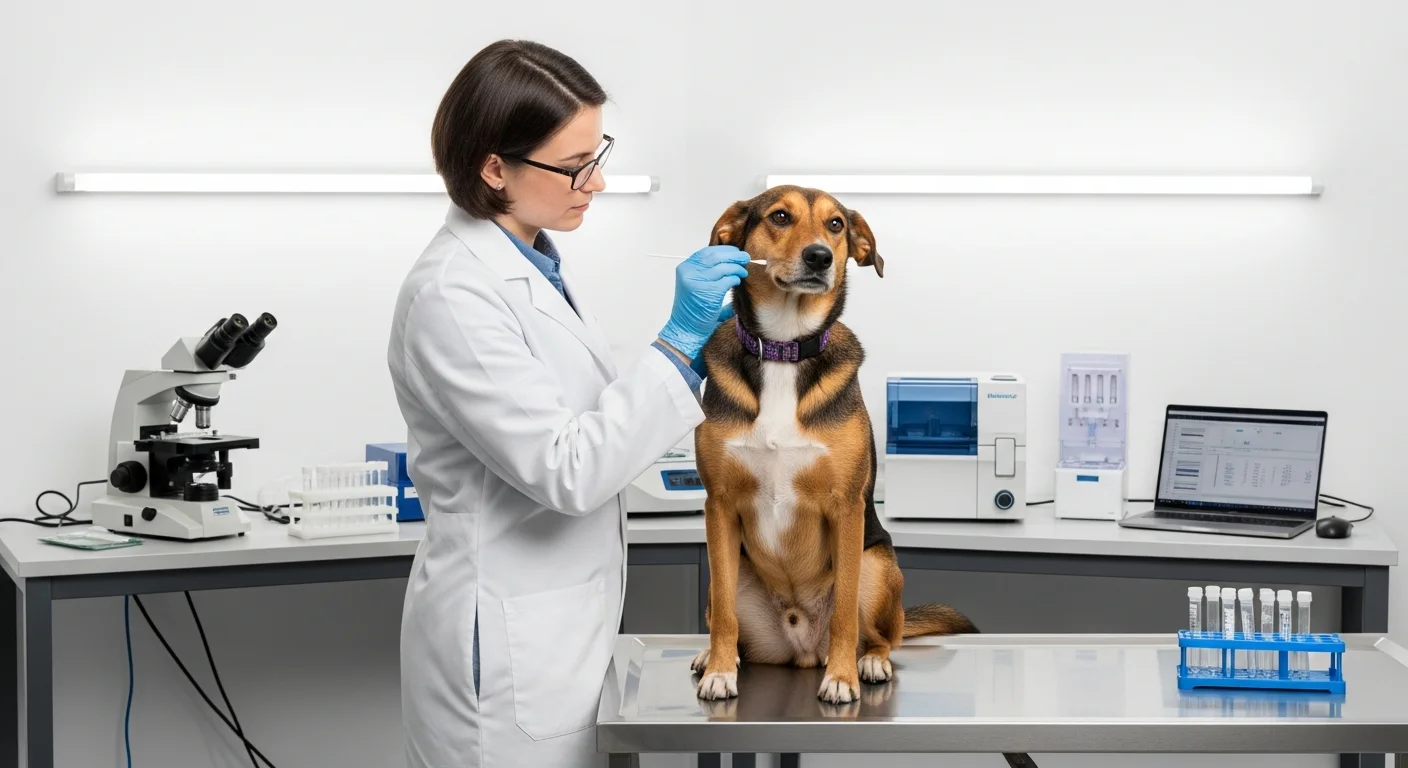
Identifying genetically diverse individuals. Population-level kinship analysis, using SNP genotyping data from many breed members, identifies dogs with genuinely low mean kinship — the dogs whose genetic contributions are most valuable to preserve.
Banking semen from rare bloodlines. Dogs from geographic isolates, from lines that are declining in numbers, or from foundation-period individuals before major population bottlenecks carry alleles that may be unique. Banking semen before these dogs die preserves their genetic contribution indefinitely.
Maintaining diverse collections. A gene bank that holds material from only three individuals provides limited value; one spanning dozens of genetically diverse individuals provides meaningful insurance. Breed clubs coordinating across national borders can build substantially more diverse archives than any individual breeder.
The connection to future developments in canine genomic medicine is direct: as our ability to use genomic information in breeding decisions improves, gene bank material will become increasingly valuable for accessing carefully characterized genetic variants.
Managing the Popular Sire Problem
Conservation biology’s experience with captive populations highlights the popular sire problem as one of the most consistent and preventable sources of genetic erosion in managed populations. Zoo breeding programs long ago recognized that allowing one individual to contribute disproportionately to the next generation collapses genetic diversity, regardless of how exceptional that individual is phenotypically.
Their solution: explicit caps on reproductive contribution. In well-managed captive populations, breeding recommendations specify maximum numbers of offspring per individual based on mean kinship calculations and target contribution levels. No individual, however genetically valuable, is permitted to breed so much that their overrepresentation skews the gene pool.
This principle translates directly to herding breed breeding programs. The genetic bottlenecks that have shaped Border Collies, Australian Shepherds, and German Shepherds are significantly attributable to popular sires who fathered hundreds or thousands of offspring. While breed clubs cannot legally prohibit individual breeding decisions, they can:
Publish mean kinship data for all registered dogs, making the genomic value of rare individuals visible to breeders who want to make informed choices.
Create incentive structures that recognize and reward breeders who use genetically diverse matings, rather than simply rewarding phenotypic excellence.
Establish soft limits on registration of offspring from any single sire per year, encouraging broader distribution of genetic contributions.
Flag genomically similar pairings in registration databases, alerting breeders to unexpectedly high COI before litters are produced rather than after.
Managed Genetic Integration: The Controlled Outcross
For breeds where diversity has already been severely compromised, conservation biology sometimes advocates for managed genetic integration — the deliberate introduction of alleles from closely related species or populations. In captive wildlife, this might mean introducing individuals from a different geographic subspecies; in dogs, the analogous approach is controlled outcrossing to closely related breeds.
Several herding breed health initiatives have explored or implemented controlled outcrosses. The most extensively documented is the long-running program to introduce working-line alleles into severely bottlenecked show-line populations of certain breeds, where decades of divergent selection have created nearly distinct gene pools. More controversial but biologically defensible are proposals for limited introduction of genetic material from closely related breeds or landrace populations to restore diversity lost through the closed-registry system.
The inbreeding coefficient impacts of such programs must be carefully modeled before implementation. A population with Ne=50 that introduces even one highly divergent individual per generation may show substantial benefit in terms of heterozygosity recovery, provided the subsequent backcross program is carefully managed to retain the desired trait characteristics of the recipient breed.
Practical Steps for Individual Breeders
While population-level genetic management requires coordinated action across breed clubs and registries, individual breeders can contribute to genetic conservation through several practical choices:
Prioritize COI and kinship over pedigree prestige. A stud dog whose pedigree does not include the most celebrated contemporary champions but who is genetically unusual relative to the broader breed population may offer more to the breed’s long-term health than a heavily used champion whose genetics are already well represented.
Seek mates from divergent lines. This may mean looking outside your national breed club, importing or using internationally frozen semen, or collaborating with working-line breeders if you primarily breed show dogs (or vice versa).
Participate in population genomic studies. Several breed-specific research projects request DNA samples and basic pedigree data from breed members worldwide. Contributing to these databases supports the population-level analyses that can identify genetically valuable individuals and track diversity over time.
Support gene banking initiatives. Banking semen from genetically unusual dogs you own or breed is an investment in the breed’s future that costs relatively little but preserves options that cannot otherwise be recovered.
The vision of herding breed communities as active stewards of their breeds’ genetic heritage — rather than passive participants in a market-driven selection process — aligns with the best traditions of working dog breeding. The dogs described in our behavioral genetics article as embodying the extraordinary heritage of thousands of years of selection deserve breeding programs worthy of that inheritance.