The Collie’s Genetic Health Landscape
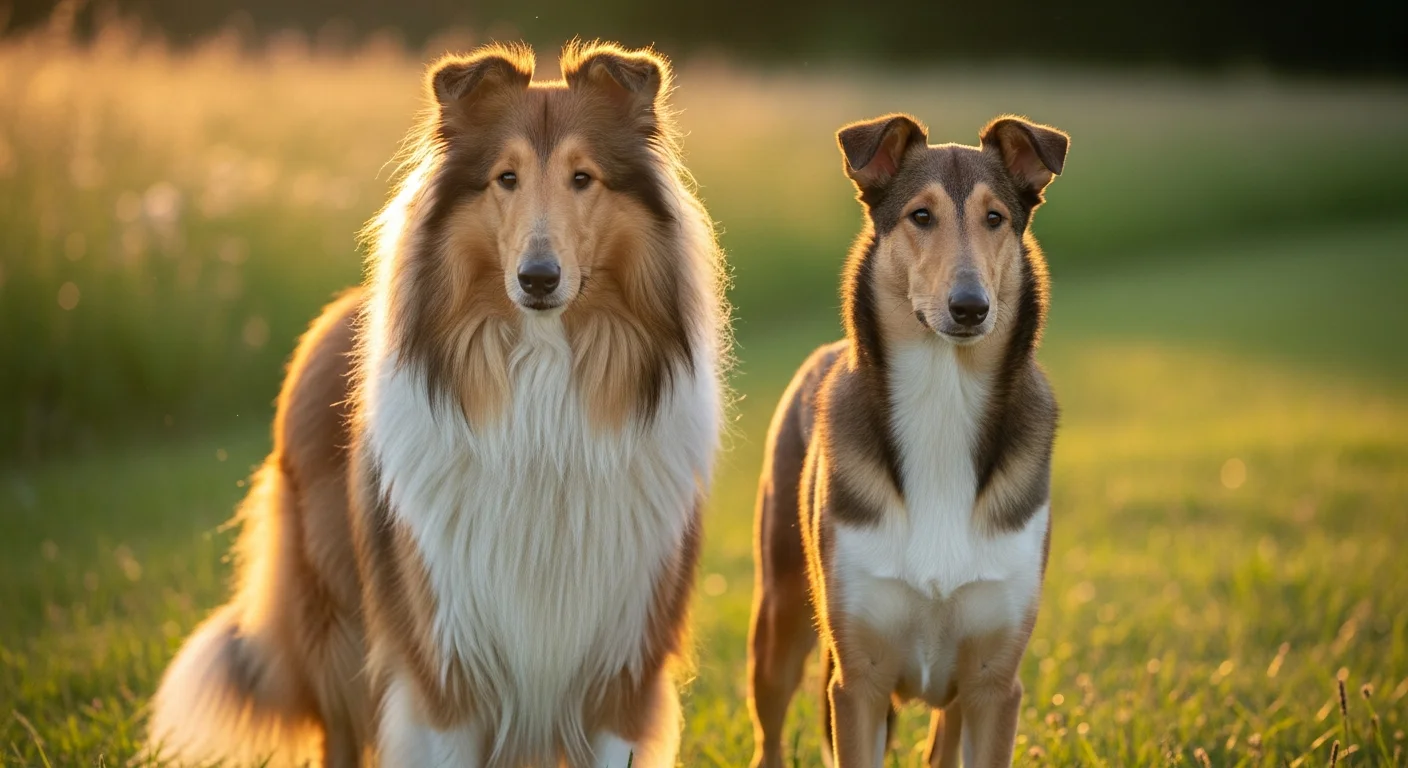
The Rough Collie, with its flowing mane and aristocratic bearing, and its closely related Smooth Collie counterpart, represent one of the most recognizable herding breeds in the world. Yet behind the elegance of these dogs lies a genetic health profile that demands serious attention from breeders. Collies carry a higher density of well-characterized, testable inherited conditions than almost any other herding breed, creating both a challenge and an opportunity: the challenge of managing multiple disease alleles simultaneously, and the opportunity to eliminate several serious conditions from breeding programs using available tests.
This article provides a comprehensive overview of the major genetic health conditions affecting Rough and Smooth Collies and the testing protocols that support responsible breeding.
Collie Eye Anomaly (CEA)
Collie eye anomaly is perhaps the most widely known inherited condition in Collies and serves as a defining test for the breed in most health screening programs. CEA is caused by a 7.8 kilobase deletion on chromosome 37 that affects the NHEJ1 gene, which is involved in DNA repair and is also expressed in the developing eye.
The deletion causes abnormal development of the choroid, the vascular layer beneath the retina. In its mildest form, CEA produces only choroidal hypoplasia — thinning and pallor of the choroid in one or both eyes — which may have minimal visual impact. In more severe cases, CEA causes colobomas (developmental defects that may involve the optic disc or retina), retinal detachment, or intraocular hemorrhage, leading to significant vision impairment or blindness.
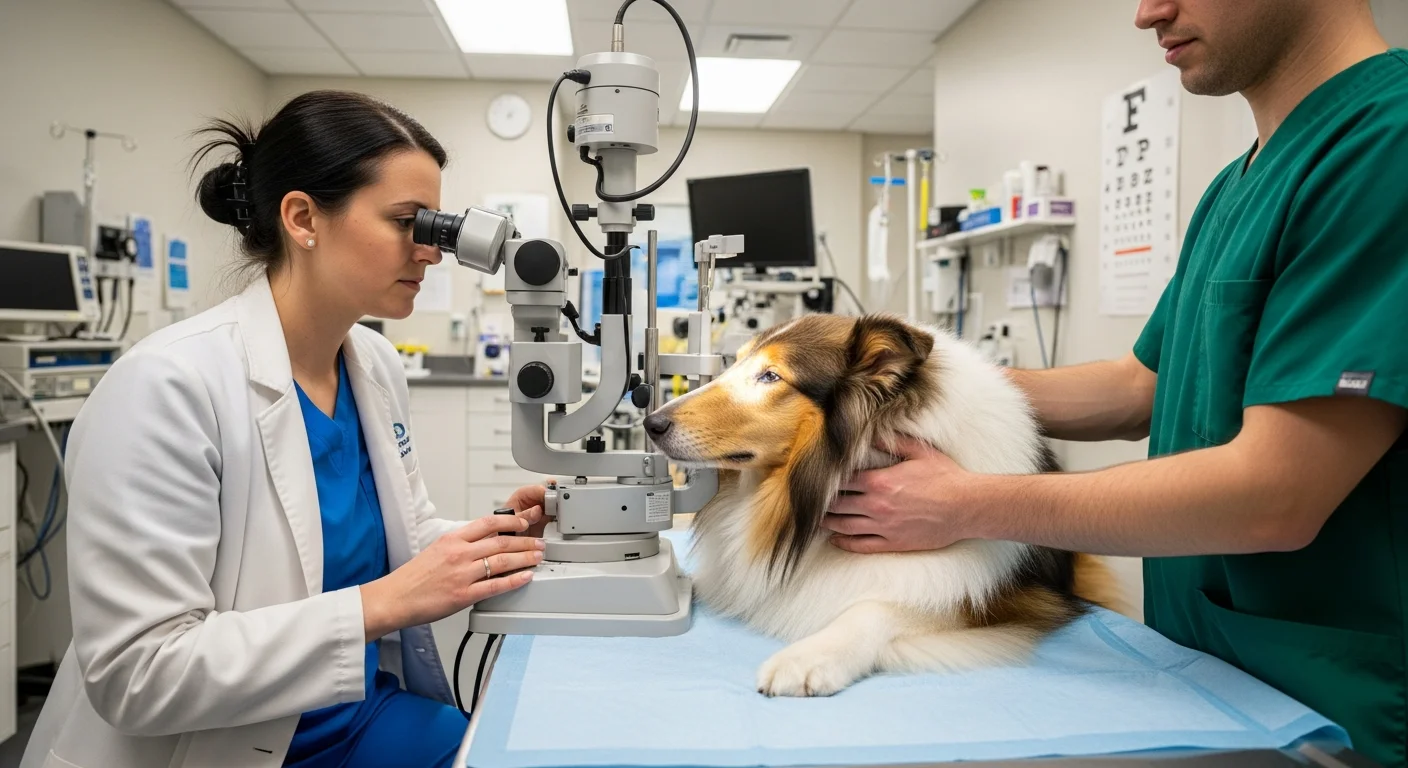
A genetic paradox in CEA is the phenomenon of “phenotypically normal carriers.” In some affected dogs, choroidal hypoplasia present in the puppy’s eye becomes obscured by pigmentation as the dog matures, making the lesion invisible on ophthalmic examination after six to eight weeks of age. These “go normal” dogs are still genetically affected and can produce the full range of CEA pathology in their offspring. This is one reason why ophthalmologic screening for CEA should ideally be performed on puppies at five to seven weeks of age, before pigmentation masks early lesions.
DNA testing for CEA identifies the causal deletion and is not subject to the masking issue that affects clinical examination in adult dogs. However, unlike simple recessive conditions where homozygous affected dogs show the worst outcomes, CEA’s relationship between genotype and severity is complex. Heterozygous dogs (one normal, one affected allele) typically show the mildest forms; homozygous affected dogs show more severe lesions on average, but there is individual variation. Testing reveals genotype but cannot precisely predict the specific ocular phenotype.
For breeding decisions, CEA-clear dogs are preferred, though the prevalence of the affected allele in Collie populations has historically been high enough that eliminating all carriers from breeding would substantially reduce the already limited gene pool. The carrier × clear strategy produces no homozygous affected offspring while allowing carrier dogs of otherwise excellent quality to contribute to the breed.
Progressive Retinal Atrophy in Collies
In addition to CEA, Collies are susceptible to progressive retinal atrophy through the prcd mutation. The combination of CEA and prcd testing creates a more complete picture of ocular genetic risk. As detailed in our comprehensive article on PRA in herding breeds, prcd-PRA causes gradual photoreceptor degeneration leading to night blindness and eventual complete vision loss, typically presenting in middle age.
Managing two independent ocular disease alleles in the same breed requires careful attention to the genotype at both loci when making pairing decisions. A breeder who successfully pairs two CEA-clear dogs may unknowingly pair two prcd-PRA carriers if they are not also testing for prcd, and vice versa. The solution is comprehensive ophthalmologic testing, including both CEA status and prcd genotype, for all breeding animals.
MDR1 Mutation in Collies
Rough and Smooth Collies are among the herding breeds most significantly affected by the MDR1 (also known as ABCB1) mutation, which disrupts the P-glycoprotein drug efflux pump at the blood-brain barrier and other tissue barriers. As detailed in our MDR1 gene guide, dogs with two copies of the mutant allele are severely sensitive to numerous medications, including ivermectin, loperamide, vincristine, and several other commonly used drugs.
Published surveys have documented MDR1 mutant allele frequencies in Collies that exceed those in almost any other breed. Some studies report that over 70% of Rough Collies carry at least one MDR1 mutant allele, and a substantial proportion are homozygous mutant. This extraordinary prevalence reflects the concentration of the allele through the breed’s founder population and the historical isolation of Collie genetics from outside gene flow.
The clinical consequences can be severe: homozygous mutant Collies given even standard antiparasitic doses of ivermectin-class drugs may develop acute neurotoxicity — disorientation, ataxia, tremors, coma, and potentially death. The breadth of the drug sensitivity extends beyond simple dose adjustments to include medications in anesthesia, cancer chemotherapy, and diarrhea management, making MDR1 genotyping essential information for any veterinarian treating a Collie.
Dermatomyositis
Dermatomyositis (DM) is an inflammatory condition affecting the skin and muscle that is particularly associated with Rough and Smooth Collies and Shetland Sheepdogs. Unlike the conditions discussed above, DM does not have a simple Mendelian inheritance pattern. Genetic studies have identified several regions of the genome associated with DM susceptibility, with the condition appearing to involve complex interactions between multiple loci.
Clinical signs typically appear between seven and eleven weeks of age and include skin lesions — scaling, crusting, and hair loss — primarily on the face, over bony prominences, and at the tail tip. In severely affected individuals, muscle atrophy develops, particularly in the muscles of mastication. Mild cases may resolve spontaneously; severe cases involve persistent skin disease and progressive muscle wasting with significant quality-of-life impact.
The genetics of DM involve a haplotype in the MHC region (DLA-DQA1) that is associated with susceptibility, along with variants outside the MHC that modify risk. This MHC connection places DM in the same category as autoimmune thyroid disease — an immune-mediated condition shaped significantly by the DLA diversity that population genetic forces in herding breeds tend to erode over time.
Testing for DM risk markers is available from specialist laboratories. The complexity of the genetics means that test results provide probability information rather than definitive carrier or affected status. A dog carrying the high-risk DLA haplotype is at elevated probability of producing affected offspring if bred to another high-risk haplotype carrier, but risk probability must be balanced against the genetic diversity value of the individual in question.
Degenerative Myelopathy
Degenerative myelopathy (DM), the progressive neurological condition linked to the SOD1 gene mutation, affects Collies as it does many herding breeds. The condition produces progressive rear limb weakness and ataxia in older dogs, typically presenting at seven to fourteen years of age, with a slowly progressive course that eventually leads to complete paralysis.
SOD1 testing identifies dogs that are clear (two normal alleles), carriers (one normal, one mutant allele), or at-risk (two mutant alleles). Importantly, while being homozygous for the SOD1 mutation is necessary for developing DM, it is not sufficient — other genetic and environmental factors influence which at-risk dogs actually develop clinical disease. Our detailed article on the SOD1 gene and degenerative myelopathy provides comprehensive background on both the molecular mechanism and the management of affected dogs.
Coordinating Multiple Tests: A Practical Framework
Managing genetic health in Collies requires testing for multiple conditions simultaneously and integrating the results into a coherent breeding decision. A complete minimum testing protocol for Collie breeding stock includes:
Eye examination: Performed at five to seven weeks of age (puppies) for CEA screening. Adult breeding stock should have annual CAER-registered eye examinations.
CEA DNA test: Identifies CEA status regardless of the dog’s age or pigmentation status.
prcd-PRA DNA test: Identifies PRA carrier status.
MDR1 DNA test: Identifies drug sensitivity status. This should be done for all Collies, not just breeding stock, because it affects veterinary care across the dog’s entire life.
SOD1 DM test: Identifies degenerative myelopathy risk.
TgAA thyroid screening: Annual testing recommended for breeding animals, particularly as they approach middle age.
The logistical challenge of running multiple tests from multiple laboratories is increasingly addressed by multi-panel tests that screen for several conditions from a single DNA sample. When evaluating commercial panel offerings, breeders should verify which specific mutations are included and whether the panel covers all breed-relevant conditions or only a generic subset.
The goal of comprehensive testing is not to create a situation where only genomically perfect dogs are bred — such a standard would further reduce an already limited gene pool — but rather to enable informed decisions that balance health risk management with genetic diversity preservation and the selection of working traits and temperament. The inbreeding coefficient considerations that bear on all herding breed programs are particularly acute in Collies, where historical effective population sizes have been small and carrier frequencies for multiple conditions are elevated.
For questions about specific test interpretation or incorporating genomic data into Collie breeding decisions, our contact page provides a route to reach experienced canine genetics consultants.