Exercise-Induced Collapse: When an Active Dog Suddenly Cannot Stand
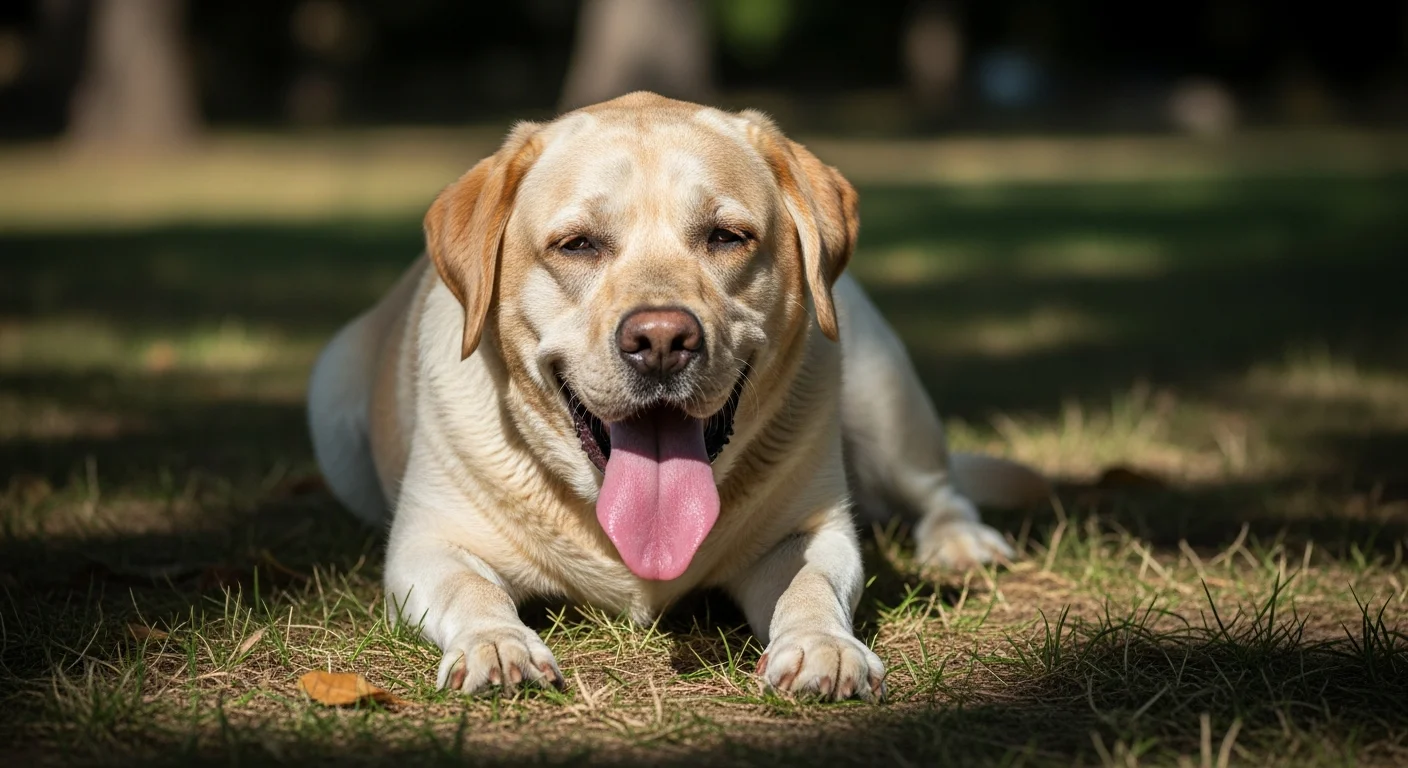
Exercise-induced collapse (EIC) is one of the more dramatic and alarming inherited conditions a dog owner or trainer might encounter. A dog that appears perfectly normal at rest suddenly develops rear limb weakness during intense exercise, progresses to an inability to stand, and then recovers completely within minutes without any apparent distress. The episodes can look like a seizure, a stroke, or a catastrophic musculoskeletal injury, yet the dog lies quietly, appears mentally alert, and walks away seemingly unaffected twenty to thirty minutes later.
Understanding EIC begins with its molecular cause: a variant in the dynamin 1 (DNM1) gene that disrupts normal neuromuscular transmission under conditions of intense sustained effort. This variant, inherited as an autosomal recessive, has been most intensively studied in Labrador Retrievers, where it first came to veterinary attention in field-trial performance contexts. However, the same mutation has been identified in other retrieving breeds and, importantly, in Chesapeake Bay Retrievers and occasionally in working dog crosses that may include herding breed ancestry.
For herding breed breeders and owners, EIC occupies an interesting position: not primarily a herding breed disease, but one that informs important principles about exercise genetics and that can appear in mixed working dog contexts. Understanding EIC also provides a case study in how recessive disease mutations spread through high-performance working dog populations.
The DNM1 Gene and Its Function
Dynamin 1 is a GTPase enzyme that plays a critical role in the recycling of synaptic vesicles at nerve terminals. During intense neuronal activity, vesicles that have fused with the presynaptic membrane to release neurotransmitter must be rapidly retrieved and recycled to maintain continuous transmission. DNM1 is essential for this endocytic retrieval process.
The EIC-causing mutation is a missense variant in the DNM1 gene: a single nucleotide change that substitutes one amino acid for another in the encoded protein. Homozygous affected dogs (two copies of the mutant allele) produce a DNM1 protein with reduced GTPase activity. Under normal, low-intensity conditions, the defective enzyme has sufficient reserve capacity to maintain adequate neuromuscular transmission. But under intense, sustained exercise — the kind that taxes the nervous system to its maximum — the recycling machinery cannot keep up with demand, and synaptic transmission begins to fail.
The specific trigger for EIC episodes is high-intensity exercise maintained for five to fifteen minutes, often combined with excitement or heat. The pattern is highly characteristic: dogs are fine at the start of exercise, show weakness beginning in the rear limbs after sustained effort, and recover within fifteen to twenty-five minutes of rest. Core body temperature during episodes is often elevated but rarely reaches values that would explain collapse independently.
Clinical Signs and Differential Diagnosis
The typical EIC episode follows a recognizable pattern, but several other conditions can cause exercise-related collapse and must be distinguished from EIC:
Exercise-induced hyperthermia causes collapse in dogs that overheat during activity, particularly brachycephalic breeds or dogs exercised in hot weather. Unlike EIC, heat-related collapse involves significantly elevated rectal temperatures, often above 41°C (105.8°F), and requires active cooling.
Cardiac arrhythmias can cause collapse during exercise and are important to rule out because they represent a direct cardiac risk. Some herding breeds, including German Shepherds and Boxers, have breed-specific cardiac conditions worth considering in any dog with exercise-associated collapse. An electrocardiogram during or immediately after exercise is the most useful diagnostic tool.
Hypoglycemia in working dogs is an underappreciated cause of collapse, particularly in lean, high-drive dogs given inadequate caloric support during field work. Blood glucose measurement during an episode differentiates this from EIC.
Myasthenia gravis is an immune-mediated disorder of neuromuscular transmission that can cause exercise-induced weakness resembling EIC. Unlike EIC, myasthenia gravis is typically not purely breed-related and may involve esophageal dilation (megaesophagus) and other signs.
Degenerative myelopathy in its early stages can cause hind limb weakness that might be noticed preferentially during exercise. However, the weakness in degenerative myelopathy is progressive and not episodic — affected dogs do not recover after rest. Our article on the SOD1 gene and degenerative myelopathy provides detailed discussion of this important herding breed condition.
Prevalence and Breed Distribution
EIC has been most systematically studied in Labrador Retrievers, where surveys in North American field-trial populations found carrier rates approaching 30% in some lines and affected rates (homozygous mutant) of 3-6%. These high frequencies reflect the combination of a closed-registry population, intensive selection for field-trial performance (which concentrated dogs that worked at extreme intensity), and the time before testing existed when affected dogs that recovered quickly were simply bred without diagnosis.
Among herding breeds specifically, EIC has been identified in:
Chesapeake Bay Retrievers: A separate mutation at the same locus causes EIC in Chessies, distinct from the Labrador mutation. This illustrates that the DNM1 pathway is a point of vulnerability, with different mutations arriving independently in different populations.
Curly-Coated Retrievers and Flat-Coated Retrievers: Both carry the same mutation as Labradors, consistent with shared ancestry.
In pure herding breeds — Border Collies, Australian Shepherds, Kelpies, Shelties — EIC due to the DNM1 mutation is not a well-documented primary concern at present. However, any dog with mixed ancestry including retriever contributions warrants testing if episodic exercise collapse is observed.
DNA Testing and Interpretation
DNA testing for EIC identifies the specific DNM1 variant and reports results as:
Clear (N/N): Two normal alleles. The dog cannot develop EIC or produce affected offspring.
Carrier (N/EIC): One normal and one mutant allele. The dog will not develop EIC. Carriers can be bred to clear dogs without producing affected offspring.
Affected (EIC/EIC): Two mutant alleles. The dog may develop EIC during intense exercise. Not all homozygous affected dogs will inevitably collapse; the penetrance is high but affected dogs vary in how reliably they express the phenotype under typical exercise conditions.
The discovery that many affected dogs can exercise at moderate intensities without episodes, and that the phenotype can be managed by avoiding the specific exercise conditions that trigger collapse, has led some working dog trainers to suggest that EIC testing results should not automatically disqualify dogs from working roles. This is a nuanced position: an affected dog that is never asked to sustain high-intensity effort for more than a few minutes may function normally in many working contexts. However, unpredictable collapse in demanding field or herding situations represents a genuine safety and welfare concern.
For breeding decisions, the same logic applies as to other recessive conditions in herding breeds. The management of disease allele frequencies requires balancing genetic diversity considerations against health impact — a theme also explored in the context of inbreeding and COI management.
Managing an EIC-Affected Dog
Dogs diagnosed with EIC can often continue active lives with appropriate management:
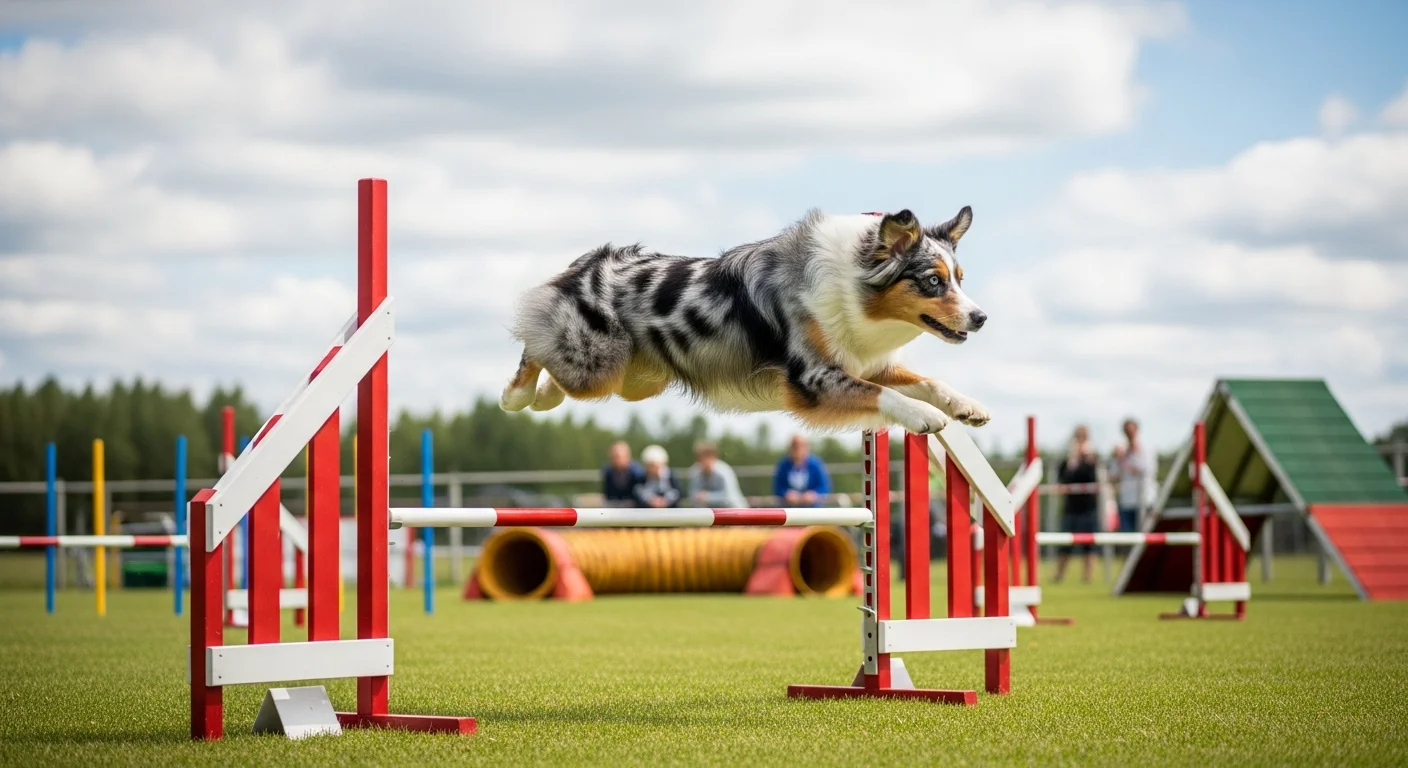
Exercise intensity limits: Most affected dogs can exercise comfortably at moderate intensities indefinitely. The key is avoiding the sustained, intense effort that triggers the neuromuscular fatigue cascade. Interval training with built-in rest periods is often tolerated well.
Temperature management: Exercise in cooler conditions and ensuring adequate cooling during and after activity reduces trigger risk. Many affected dogs have significantly fewer or less severe episodes when exercised in mild weather.
Excitement management: High arousal states appear to increase susceptibility. Some handlers report that keeping an affected dog calm during preparation and transitions between exercises reduces episode frequency.
Emergency response: If a collapse episode does occur, the most important response is to stop exercise immediately, move the dog to a cool environment, offer water, and allow rest. Do not forcibly restrain a collapsing dog or attempt to apply active cooling such as cold-water immersion unless rectal temperature confirms hyperthermia.
Veterinary monitoring: Dogs with confirmed EIC should have baseline cardiac and metabolic workups to rule out any additional contributing conditions. As the dog ages, its tolerance for intense exercise may change, and annual veterinary reassessment helps adjust management accordingly.
Connection to Broader Herding Breed Health Management
EIC illustrates a principle that applies across many inherited conditions in working dogs: the conditions that allow a disease allele to reach high prevalence often relate directly to the selection pressures that made the breed valuable. In Labrador field-trial lines, intense drive, endurance, and willingness to sustain effort were precisely the traits being selected — and the same intensity of effort that made affected dogs competitive was also what triggered their episodes. Breeders working with affected dogs before testing existed may never have been aware of the condition because the dogs recovered so quickly.
This hidden prevalence problem is common in recessive conditions with delayed or context-dependent phenotypic expression. The solution is prospective testing before conditions become highly prevalent — a lesson that applies equally to the herding breed conditions discussed elsewhere on this site, from MDR1 sensitivity to progressive retinal atrophy.
The availability of commercial DNA testing has transformed management of EIC since its molecular cause was identified in 2007. Breeders who test systematically and avoid affected × carrier or affected × affected pairings can progressively reduce the frequency of the EIC allele in their lines while retaining the genetic diversity and working quality they have developed. This is the promise that comprehensive canine DNA testing offers across the full spectrum of inherited disease — not the elimination of working ability, but its preservation alongside meaningful health improvement.